Hey everyone, if you’ve ever walked through a custom parts shop, you’ve probably heard the team here ramble about 3-axis vs 5-axis CNC milling. As your go-to CNC milling services provider, I get questions about this every single day—usually from folks who just need a prototype or a production run and have no clue what those axis numbers even mean. Let’s break this down like we’re shooting the breeze over coffee, no stuffy jargon and no confusing textbook lines. CNC Milling Services
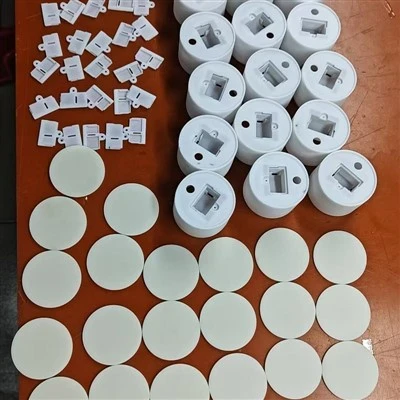
First, let’s keep it super simple. What’s an axis, anyway? Think of a 3-axis mill like a 3D video game character moving in basic directions: X is left-right, Y is forward-back, Z is up-down. That’s the classic setup—been around for decades, and it’s the workhorse of almost every small to medium machining shop. If you’re making a simple block, a basic bracket, or a flat part with holes and straight edges, 3-axis does the trick, no questions asked. But here’s the catch: with 3-axis, the part stays locked on the table, right? The tool moves around it, but you can only get to one side at a time. If you need to mill a curve on the top and the side of that same part? You’d have to stop the machine, flip the part, clamp it again, and set up the tool paths all over. That adds time, right? And every time you re-clamp, there’s a tiny risk of misalignment, which can mess up your part’s tolerance. For low-volume runs or simple parts, that’s a trade-off most people are fine with. But for complex stuff? That’s where 5-axis changes the game.
Now, 5-axis mills add two more axes: usually A and B, or sometimes A and C. Those let you tilt the part or the tool so you can reach every side without flipping it. Let’s say you’re making a turbine blade, a camera mount with angled holes, or a medical implant that has curves all over. With 5-axis, you can machine all those sides in one setup. No stopping, no re-clamping, less chance of error. That’s a huge win for precision, especially for parts that need tight tolerances—like within 0.001 inches, tiny enough that a tiny clamp shift would ruin a part. But wait, it’s not all perfect. 5-axis mills are way more expensive upfront than 3-axis. The machines cost more, the programming takes longer (we use specialized software here to map those tilted paths, which is way trickier than basic 3-axis g-code), and the lead times can be a little longer if you need to book the machine for a specific job. So it’s not a “better is always” scenario—it’s about matching the tool to the job.
Let me give you a real example from our shop to make this concrete. Last month, a customer came in needing 50 of these simple aluminum brackets for bike frames. Flat, two holes on top, a straight edge along the bottom. We ran those on 3-axis, cranked them out in 2 days, cost the customer a fraction of what 5-axis would have charged. No reason to use the fancy machine here—they didn’t need it. Then a week later, a aerospace client brought us a prototype for a small satellite component. It had angled pockets on four different sides, a curved inner channel that had to line up with a sensor, and tight tolerances that couldn’t shift. We used 5-axis for that, and even though the machine took a few extra hours to program, we cut the lead time by 3 full days (no flipping, no re-clamping) and the part was spot-on. That’s the difference right there.
Another big point people miss: part complexity. If your part has undercuts, contoured surfaces, or features that aren’t parallel to the top of the stock? 3-axis can’t do that without multiple setups, which add cost and risk. Undercuts—like a notch on the side of a part that’s hidden from the top—are a classic 5-axis job. The tool can tilt to reach that notch without spinning the whole part around. For 3D printed parts that need machining to smooth out layers, 5-axis is also great because you can machine from angles that avoid damaging delicate features, like thin walls or small protrusions on the part.
But here’s the thing: 5-axis isn’t just for “fancy” parts. It’s also for when you want to reduce hand-finishing. If you run a part on 5-axis, the surface finish is way smoother because the tool is constantly moving at the optimal angle, instead of being locked in one direction. That means less sanding or polishing after machining, which cuts down on labor time. But again, that’s only worth it if the finish matters—like for consumer products or medical parts that go right on the body. If your part is just a raw steel bracket that gets painted after, hand-finishing might be fine, so 3-axis is your guy.
Now, let’s talk about cost because that’s the biggest question everyone has. 3-axis machining is cheaper per part for simple runs. The machines are more common, programming is faster, setup is a breeze. We can quote a job for a 3-axis part in a few hours, usually. 5-axis jobs take more time to program, the machine’s hourly rate is higher, and you have to account for the more precise fixturing (the clamps that hold your part) because the part is moving. For short runs, like 1 or 2 prototypes, sometimes 5-axis isn’t worth it—even if the part is complex—because the programming costs might outweigh the time you’d save from no setups. But for long runs, like 1000+ parts, 5-axis almost always saves money because you avoid the cost of multiple setups and reduce scrap parts from misalignment.
Wait, let’s clear up a common myth: 5-axis isn’t just “3-axis with two extra axes.” It’s a totally different way of thinking about machining. The software we use here for 5-axis—let’s just call it CAM software, no need for the full name—has to calculate the tool path for two extra rotations, so it’s way more complex. A tiny mistake in the tool path can crash the tool into the part or the machine, which is way more expensive to fix than a 3-axis crash. That’s why not every shop can do 5-axis well—you need experienced programmers who know how to avoid those mistakes. Our team has been doing this for years, so we’ve got that covered.
So when should you pick which one? Let’s make a quick checklist. If your part is flat, has features all on one side, is simple to clamp, and you’re doing a short or medium run? Go 3-axis. If your part has features on multiple sides, undercuts, contoured surfaces, tight tolerances, or you need to cut down on lead time and hand work? 5-axis is the way to go. If you’re still not sure, just send us a sketch or a STEP file, and we’ll tell you straight up which one makes sense—no upselling, no hidden fees.
Here at our CNC milling services, we’ve got both machines, so we’re not biased. We’ve seen customers pay way too much for 5-axis when they only needed 3-axis, and we’ve seen customers run a 3-axis job that took twice as long as it should have because they tried to cut corners on a complex part. Our whole thing is giving you the right solution, not the fanciest one.
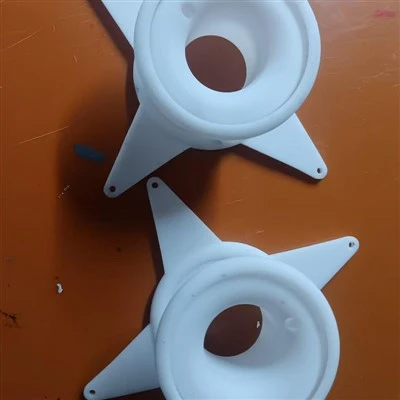
If you’ve got a prototype, a production run, or even just a random part that needs machining, we’re here to help. No long sales pitches, no fine print, just honest pricing and parts that fit your specs. Reach out to our team to discuss your project, and we’ll get you a quote in 24 hours or less.
CNC Milling Services References
- DeVries, W. R. (2017). CNC Machining: Theory and Practice. Springer.
- Smith, G. T. (2020). Fundamentals of CNC Milling Technology. Industrial Press.
- Machining Trends Association. (2022). "5-Axis vs. 3-Axis Machining: Industrial Applications Report."
Shenzhen Multi-Wins Precision Technology Co., Ltd.
As one of the most professional CNC milling manufacturers and suppliers in China, we have world-leading production equipment and strong manufacturing capabilities. Please feel free to buy customized CNC milling made in China here from our factory. Also, quotation is available.
Address: 1 Phase, Yi’an City Central Garden, Longfei Avenue, Longgang District, Shenzhen, GD, China. 518100
E-mail: info@multi-wins.com
WebSite: https://www.multi-wins.com/
