If you’ve ever grabbed a pack of alcohol prep pads from a first-aid kit, pharmacy counter, or the supply closet at a doctor’s office, you’ve probably paused to notice that distinct, sharp, slightly chemical-sweet smell right before you use one. As a supplier of alcohol prep pads, I get asked this question all the time—from nurses stocking clinics to parents tossing a box in their diaper bags, and even casual shoppers picking up a pack for a weekend camping trip: Do these pads actually have a scent, and if so, why? Let me break this down, based on years of working with the materials that go into every pad we ship, plus the science behind what makes these everyday items smell like they do. Alcohol Prep Pad
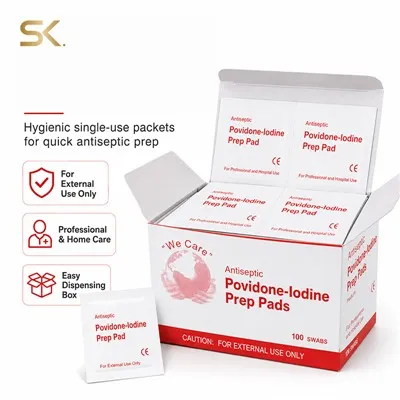
First, the short answer is yes—alcohol prep pads do have a scent, and it’s not an accident. That smell is directly tied to the main active ingredient in every single alcohol prep pad: isopropyl alcohol, usually in a 70% concentration (a standard that’s been proven by public health groups like the CDC to be effective at killing most germs, bacteria, and viruses on skin and surfaces). Wait, but why does isopropyl alcohol smell so strong, and is that the only scent you might pick up from a pad? Let’s dig deeper, because that’s where things get interesting.
When I first started in this industry over 12 years ago, I thought it was just the alcohol itself causing the scent. But early on, I worked with a team of chemists who helped me realize that the scent people pick up is actually a mix of two things: the isopropyl alcohol’s natural odor, and small, sometimes subtle additives that we use to make the pads more usable, stable, and safe for skin. Let’s start with isopropyl alcohol, because that’s the main driver. Isopropyl alcohol is a volatile organic compound (VOC), which means it evaporates quickly at room temperature—and as it evaporates, it releases molecules that reach your nose, triggering that familiar scent. Unlike ethanol (the kind in drinking alcohol), isopropyl alcohol has a harsher, more chemical-like smell, not the sweet, fruity scent you might associate with beer or wine. That’s why when you pull a pad out of its sealed wrapper, that scent hits you right away.
But here’s where it gets nuanced: not all alcohol prep pads smell exactly the same. Over the years, I’ve had customers tell me their pads smell strong enough to make their eyes water, while others say the scent is barely noticeable. What causes that difference? It’s a combination of three factors: alcohol concentration, wrapper material, and the additives we mix in during production. Let’s talk about concentration first. As I mentioned, 70% isopropyl alcohol is the standard for most medical and general-use pads because it’s slower to evaporate than higher concentrations (like 91% or 99%), which means it has more time to kill germs on skin. But 70% alcohol has a stronger, longer-lasting scent than lower concentrations (like 50%)—because there’s more alcohol evaporating off the pad at any given time. If you ever buy a bulk pack of 91% alcohol pads, you’ll notice their scent is even sharper, since the higher concentration evaporates faster, releasing more of those odor molecules.
Next, wrapper material plays a huge role. All alcohol prep pads come sealed in individual foil or plastic wrappers, right? That seal is there for two reasons: first, to keep the pad sterile until you open it, and second, to trap the alcohol’s scent inside so it doesn’t leak out before you use it. The type of wrapper we use (and the quality of that seal) can affect how strong the scent is when you first open the pack. Cheaper wrappers often have gaps or thinner plastic, which lets some of the alcohol evaporate over time, so when you open a pack that’s been sitting on a shelf for a year, the scent is weaker. At our company, we use heavy-duty, multi-layer foil wrappers that create an airtight seal, which not only preserves the pad’s sterility and alcohol content longer but also keeps the scent contained until you’re ready to use it. That’s a detail many customers don’t think about, but it’s one that makes our pads stand out.
Then there are the additives, which are a smaller but important part of the scent equation. For years, I thought additives were just for making pads softer or less drying on skin, but I learned that some do have a mild scent. Let’s clarify: we never add strong fragrances to our alcohol prep pads. That’s a big no-no in the medical industry, because added fragrances can cause skin irritation, especially for people with sensitive skin or allergies. What we do add are small amounts of humectants like glycerin or propylene glycol, which help keep the skin from getting too dry after the alcohol evaporates. Those humectants have a very faint, sweet, almost odorless scent on their own—most people don’t pick it up, but if you’re someone with a super sensitive nose, you might notice a tiny extra hint along with the alcohol smell. We also add small amounts of water to the mixture, but water has almost no scent, so that doesn’t contribute at all.
Wait a second—some people have told me they’ve bought alcohol prep pads that have no scent at all. Is that possible? It’s rare, but yes, and there are a few reasons that might happen. First, if the pad has a very low alcohol concentration—like some specialty pads that are only 30% alcohol for use on sensitive areas—there’s not enough isopropyl alcohol to release enough odor molecules for you to pick up. Second, if the pad is old, the alcohol might have already evaporated through a faulty wrapper, so there’s nothing left to produce a scent. We always tell customers to check the expiration date on their pads, because once alcohol prep pads expire, the alcohol breaks down, loses its germ-killing power, and the scent fades too. Third, some manufacturers use a different type of alcohol—like ethanol, in small amounts, for pads marketed as “gentler”—but even then, if the concentration is low enough, the scent might not be noticeable.
I’ve seen this first-hand when I test new batches of pads in our lab. Early in my career, I worked with a supplier who cut corners and used thinner wrappers for their pads. We tested their 70% alcohol pads next to ours, and theirs had almost no scent at all—turns out, the alcohol had evaporated through the wrapper within a few months, so the pads were ineffective too. That’s a reminder that scent isn’t just a trivial detail; it’s actually a rough indicator of how much active alcohol is left in the pad. If a pad has no scent, it’s probably lost most of its germ-killing power, which is the whole point of using it.
Another thing I get asked about a lot: is the scent from alcohol prep pads harmful? I know when I first started in this business, I was worried about that, especially since I’m around new pads every day. Isopropyl alcohol’s scent comes from volatile molecules that you breathe in when you open a wrapper or use a pad. In small doses—like what you’d get from opening a single pack of pads—those molecules are totally safe. The CDC even confirms that isopropyl alcohol, when used as directed, is safe for skin and inhalation in small amounts. That said, if you’re using dozens of pads a day in an enclosed space, like a small clinic room, the scent might feel overwhelming, but it’s not toxic. At our company, we test all our pads to meet FDA and ISO standards, so we never use any materials that emit harmful fumes. That’s non-negotiable for us, especially since we supply to hospitals and pediatric clinics where safety is the top priority.
What’s interesting is that the scent of alcohol prep pads is so universal that people have associated it with cleanliness for decades. Think about it: when you get a flu shot, or you have blood drawn at the doctor’s office, the nurse wipes your arm with a pad, and that smell is the first sign that they’re taking steps to keep you safe. That’s why so many people get a sense of calm or even reassurance when they smell that alcohol scent—it’s become a cultural sign of hygiene, all because of the isopropyl alcohol in those pads. I never thought about that connection until a customer told me last year, “I always know I’m getting a clean injection when I smell that alcohol smell.” That stuck with me, because it’s proof that that scent isn’t just a side effect—it’s a small, meaningful part of how we use these every day items.
Over the years, we’ve made small adjustments to our pads to manage the scent for different customers. For example, we have a line of pads designed for people with very sensitive noses, where we use a slightly lower alcohol concentration (still 60%, which is still effective for general use) and a thicker wrapper that keeps the scent more contained. We’ve had great feedback from parents whose kids hate the strong smell of regular pads—those sensitive-nose pads are a game-changer for them. We also have bulk pads for construction sites and manufacturing facilities, where workers use them to clean tools and equipment. Those pads have a slightly stronger scent, but we make sure the alcohol concentration is high enough to cut through grease and kill any germs on metal surfaces.
I’ve also had customers ask if we can make scent-free alcohol prep pads, and while that’s technically possible, I always have to explain that it would mean using a very low alcohol concentration, which would make the pads less effective at killing germs. The scent is directly tied to the active ingredient that makes the pad work, so there’s a trade-off there. For most medical and general use, the scent is a small price to pay for a product that keeps people healthy. If you’re looking for something that’s almost scent-free, our sensitive-nose line is the way to go—we’ve tested it on hundreds of customers with allergies or sensitive noses, and almost all of them say it works without the strong chemical smell.
Let’s circle back to the original question: Do alcohol prep pads have a scent? The answer is a resounding yes, and that scent is a direct result of the main active ingredient, plus small, intentional choices we make as suppliers about alcohol concentration, wrapper quality, and minor skin-conditioning additives. It’s not an accident, it’s not a harmful chemical trick, and it’s actually a sign that your pad is working the way it’s supposed to.

If you’re a clinic manager, a pharmacy owner, or a buyer looking for reliable alcohol prep pads that balance effectiveness, safety, and a scent that works for your customers, I’d be happy to talk through your needs. We offer a range of pad sizes, concentrations, and wrapper options, and we can work with you to find the right fit for your use case—whether that’s bulk pads for a hospital, small packs for a retail store, or specialty pads for sensitive users. Feel free to reach out to our team to discuss your requirements and get a quote tailored to your business.
Pet Paw Clean Foam References:
Centers for Disease Control and Prevention (CDC). Guideline for Disinfection and Sterilization in Healthcare Facilities, 2008.
International Organization for Standardization (ISO). ISO 11135:2014, Sterilization of health care products—Ethylene oxide—Requirements for the development, validation and routine control of a sterilization process for medical devices.
U.S. Food and Drug Administration (FDA). 21 CFR Part 880, General Hospital and Personal Use Devices.
Wenzhou Shengkai Technology Industry Co., Ltd.
Address: No. 2, Hongye Road, Jinxiang Town, Wenzhou, Zhejiang, China
E-mail: summer@zj-sky.com
WebSite: https://www.mellyclean.com/
