When I first started working at our cable harness facility 12 years ago, I thought a wire and cable assembly was just… well, wires bundled together. That was before I got a call from a farm equipment manufacturer in Iowa, who sent back a full batch of harnesses because their hay balers kept short-circuiting during harvest season. The issue wasn’t that we’d messed up a crimp or used the wrong gauge wire—turns out, we’d skipped a key standard for agricultural harnesses: resistance to UV radiation and heavy vibration. That mistake cost us the client for six months and taught me that standards aren’t just fine print; they’re the difference between a product that works and one that costs customers time, money, and their reputation. Today, as a cable harness supplier who’s spent decades debugging and refining these parts, I want to break down what the core standards for cable harnesses actually are—not just the ones on a spec sheet, but the ones that keep your equipment running when it matters most. Cable Harness
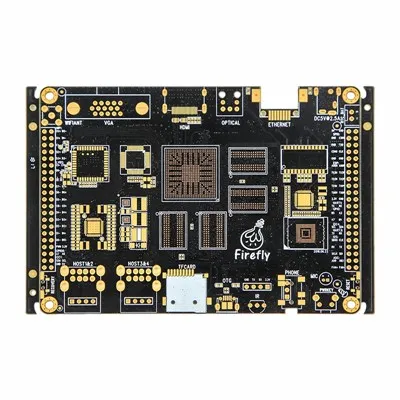
First, let’s get the basics straight: cable harnesses are custom assemblies of wires, connectors, terminals, and protective sleeves designed to route power, signals, and data between components in everything from cars and farm machinery to medical devices and industrial robots. Every industry has its own unique demands, so their standards shift, but there are three overarching, universal standards that apply to almost every harness we build. Let’s start with the one that non-technical folks often overlook, but is non-negotiable: material consistency.
Material standards aren’t just about picking shiny wires; they’re about verifying that every part of the harness can handle the environment it’s meant for. For example, if you’re building a harness for a truck that drives through snow and salt roads in winter, you can’t use standard PVC insulation—it cracks at temperatures below -40°F, and salt corrodes copper wires faster than a rainstorm on a metal roof. Instead, we use cross-linked polyethylene (XLPE) insulation for those trucks, which stays flexible in cold and resists corrosion. For aerospace harnesses, we go even further: we use high-temperature polytetrafluoroethylene (PTFE) that holds up to 500°F, and tin-plated copper wires to prevent corrosion in pressurized, high-altitude cabins.
But here’s the thing about material standards: they’re only as good as your process for verifying them. Early in my career, we got a batch of XLPE wire that seemed fine from the outside, but the insulation was thin because the manufacturer had cut corners on extrusion. When we tested it, it failed the voltage withstand test—meaning it couldn’t handle the 12V truck system, let alone the 24V heavy-duty ones. That’s why at our facility, every incoming wire, connector, and sleeve goes through a 3-step inspection: first, a visual check for any nicks, thickness inconsistencies, or wrong part numbers; second, a resistance test for copper wires to make sure they don’t have hidden gaps that cause power loss; and third, a sample voltage test on every reel of wire. We don’t cut corners here because one bad wire doesn’t just ruin a harness—it ruins a customer’s machine.
Next, assembly standards. A harness is only as strong as its weakest crimp, its misaligned connector, or its poorly routed wire. I’ve seen harnesses that look perfect on the outside, but had a crimp that was too loose—because the tech running the machine didn’t calibrate the crimp tool that day, and rushed through 50 assemblies. That loose crimp worked for a week, then heated up and melted the insulation, causing a short circuit in a hospital’s MRI machine (thankfully, that one was a test run, not a production unit). So assembly standards are specific, non-negotiable rules for how we put a harness together, and they apply to every tech on our floor, no matter how long they’ve worked here.
One of the most critical assembly standards is crimp pull strength. The crimp is the metal sleeve that connects a wire’s copper core to a terminal—if that crimp isn’t tight enough, the wire pulls loose under vibration, temperature changes, or even just regular use. Our standard for crimp pull strength is 10 pounds of force for small signal wires, and 25 pounds for power wires—way higher than most basic industry minimums. We test every batch of crimps by pulling a sample with a torque wrench; if any sample fails, we scrap that entire batch and recalibrate all our crimp tools, no exceptions. We also follow IPC standards, which are the global gold standard for cable harness assembly—they specify everything from the angle of a crimp to how much space we need to leave between wires to prevent chafing. Chafing is a big one: if two wires rub together for months, the insulation wears through, and you get a short. So we route wires in our harnesses with protective sleeves in high-friction areas, and we use cable ties spaced no more than 6 inches apart on long runs—no tighter, no looser, per IPC guidelines.
The third big set of standards is environmental testing, which is how we make sure a harness can survive the conditions it’s going to face in the field. This isn’t just sitting in a lab; it’s simulating the exact environment a customer’s machine will see. For our farm equipment harnesses, we put them through a vibration test that mimics 100 hours of driving over rocky fields—way more than the 20 hours required by basic industry standards. We also do a salt spray test, spraying the harness with a saltwater solution for 500 hours straight to make sure the copper wires and connectors don’t corrode. For medical device harnesses, we test for sterilization resistance—they have to hold up to autoclave steam and cleaning chemicals, which is why we use medical-grade silicone sleeves that don’t break down after 1000 cycles of sterilization.
A lot of customers ask me, “Why do you over-test? The industry minimum is enough.” Let me tell you about the construction company that called us two years ago. They’d been using a harness from another supplier for their excavators, and every winter, they had to replace 20 harnesses per month because they cracked in the cold. We tested their existing harness and found that it used standard PVC insulation, which only passes the -20°F minimum standard—so it worked for climates where winter temps stay above that, but not for Minnesota, where their jobsite temps drop to -30°F. We switched them to XLPE insulation, added extra protective sleeving around the wire bundles, and passed all our environmental tests. Since then, they haven’t replaced a single harness in three winters. That’s the difference between following the minimum standard and following the standard that’s right for your application.
Now, I know some of you are thinking, “Standards are for big companies—my small business has unique needs, so I don’t need to worry about all this.” But that’s not true. Even a small custom harness for a home automation system has to meet basic standards for fire resistance, right? If a wire overheats, it can start a fire. We use UL-listed wire for all our assemblies, which means it’s been tested to self-extinguish if it catches fire— that’s a standard that protects your home, your office, your business, no matter the size of the project.
As a cable harness supplier, I also work closely with customers to adapt standards to their specific needs. For example, a renewable energy client was building solar panel arrays that sit in the Arizona desert, where temperatures hit 120°F in the summer and drop to 20°F at night, plus there’s constant UV exposure from 12 hours of direct sun a day. The basic automotive standard wasn’t enough—so we worked with them to create a custom harness that meets the SAE J1643 standard for high-temperature, UV-resistant wire, but added a thicker layer of PTFE sleeving on the panel wiring to handle the extra desert sun. That’s the thing about standards: they’re a starting point, not a one-size-fits-all rule. The best harness suppliers don’t just follow the standard—they help you pick the right standard for your equipment, your environment, and your budget.
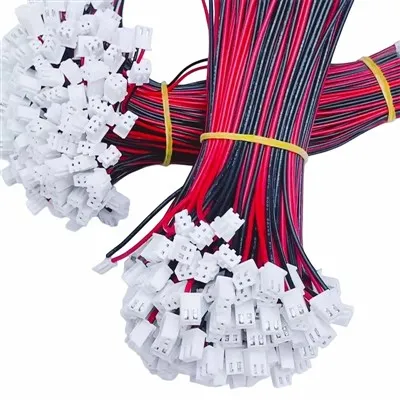
I’ve been in this industry long enough to see how a good harness can make a customer’s job easier, and a bad one can derail their whole operation. That’s why we don’t just build harnesses—we make sure every part of the assembly is tested, verified, and built to meet the standards that matter most to you. If you’re tired of harnesses that fail after a few months, if you’re dealing with short circuits, corrosion, or harnesses that don’t hold up in your specific environment, let’s talk. We can work together to go over your project, break down the standards that apply, and build a harness that works when you need it most. I don’t sell off-the-shelf harnesses; I build custom solutions that meet your exact standards, and I stand behind every assembly we ship.
References
Automotive Wire Harness IPC/WHMA-A-620, Requirements and Acceptance for Cable and Wire Harness Assemblies
SAE J1643, Performance Standard for Extra-Low-Voltage Primary Wire and Cable for Automotive and Light-Duty Vehicles
UL 1581, Standard for Wire and Cables
ASTM B117, Standard Test Method for Salt Spray (Fog) Testing
MIL-STD-202, Test Method Standard for Electronic and Electrical Component Parts
Huaswin Electronics Technology Co., Ltd.
With abundant experience, we are one of the most professional cable harness manufacturers and suppliers in China. Welcome to wholesale customized cable harness at competitive price from our factory. If you have any enquiry about pricelist, please feel free to email us.
Address: Building A2, Hao Hai Hong Industrial Park, No.3 Yu He Road, Gong He, Sha Jing, Bao An, Shenzhen
E-mail: sales@huaswin.com
WebSite: https://www.huaswin-pcba.com/
