If you’ve ever stood beside a production line humming along on the shop floor, or spent an afternoon diagnosing a car that won’t start, you’ve probably noticed the small, unassuming parts that make everything work. At our mechanical parts supply company, we see this every single day: the seals that go unnoticed until they fail, and then suddenly become the most important part of the whole operation. This is what we want to talk about today—no jargon overload, no confusing diagrams, just the real, quiet role seals play in the mechanical parts we all rely on. Mechanical Parts
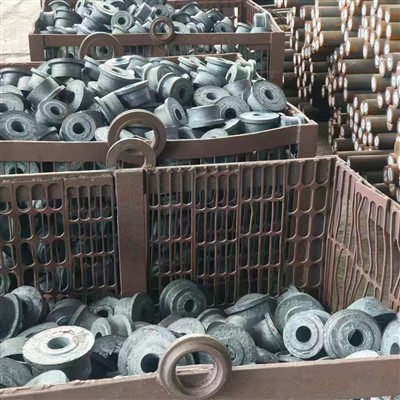
Most people think seals are just rubber rings meant to stop leaks, but that’s only scratching the surface. Let’s start with what a seal actually does, beyond the basic “keep liquid or gas in, dirt out” idea. Seals are dynamic boundary layers, holding a pressure differential between two spaces that are moving relative to each other. Think about a hydraulic cylinder on a construction excavator: it’s pushing 3,000 PSI of fluid to lift 20-ton loads, and the rod moving in and out of that cylinder would leak fluid like a sieve without a properly matched seal. Or consider the axle in a farm tractor, rotating hundreds of times a minute through mud, dust, and water—without a seal, the gear oil would drain in hours, and the bearings would grind to a halt in days.
What we’ve learned working as a mechanical parts supplier is that the best seals aren’t one-size-fits-all. A seal made for a refrigerator compressor can’t do the job for a wind turbine gearbox, and a seal that works in cold-weather drilling equipment will crack and fail in a hot, humid factory. This is where our team spends most of our time, matching seal material, shape, and size to the exact application a customer needs. For example, we supply nitrile rubber seals for general automotive applications—they stand up to common oils and moderate temperatures, and are cost-effective for high-volume replacement parts. But for a customer in the food and beverage industry, we use FDA-approved silicone or EPDM seals that won’t leach chemicals into soda or juice, even after years of exposure and regular cleaning.
Seals also play a critical role in protecting mechanical components from contamination, which is one of the top causes of part failure in our industry. Dirt, metal shavings, and moisture might seem small, but they act like sandpaper inside a precision pump or engine. A 2022 study on industrial pump reliability found that 34% of unexpected downtime was caused by particulate contamination entering through gaps in seals. That’s not just a minor inconvenience—for a manufacturing plant losing $10,000 an hour in production, a failed seal can cost six figures in a single shift. We see this all the time when customers come to us after a breakdown: their initial request is for a new pump part, but after inspection, they realize replacing the old seal would have prevented the entire issue. That’s why we often work with customers to audit their existing seal systems before failure, not just after.
Another often-overlooked role of seals is reducing friction and extending the service life of moving parts. A well-designed seal creates a thin, consistent lubricating film between itself and the surface it’s sealing, so two metal parts don’t grind against each other. This is especially important for rotating shafts in electric motors, which are used in everything from home appliances to industrial robots. We recently worked with a robotics manufacturer that was seeing 15% higher energy use in their assembly line robots, caused by excess friction in the joint shafts. After switching to custom PTFE seals with a low-friction coating, their energy use dropped by 12% and they didn’t have to replace joint bearings as often. For our team, that’s the reward of what we do—knowing a small seal can have a big impact on a customer’s bottom line and efficiency.
Let’s talk about the different types of seals, because their roles change depending on how parts move. There are static seals, which are used between parts that don’t move relative to each other—like a gasket between an engine block and valve cover. Dynamic seals, on the other hand, work with moving parts: rotary seals for shafts that spin, reciprocating seals for parts that slide back and forth, and linear seals for machinery that moves in straight lines. Each of these requires a different design and material, which is why as a mechanical parts supplier, we don’t just stock standard seals—we can engineer custom seals for unique applications. For example, a space equipment manufacturer came to us with a seal that had to work in a vacuum, at temperatures ranging from -200°F to 200°F, and not outgas any particles that would damage sensitive sensors. Our engineering team developed a custom Kalrez-based seal for them, which is now used in several satellite components. This kind of specialized work is what sets our parts apart from generic alternatives.
We also see that many customers undervalue seal quality, choosing the cheapest seal they can find to cut costs. But in the long run, that’s a false economy. A low-quality seal made from recycled rubber might cost 20% less upfront, but it can fail in months, leading to part replacement, downtime, and safety risks. Last year, a small trucking company approached us after a cheap aftermarket seal failed in their delivery trucks, causing transmission fluid to leak and leaving their drivers stranded on the highway. They replaced 12 seals with our premium-grade seals, and in the year since, they haven’t had a single seal-related transmission failure. That’s the value we bring: durable, precision-engineered seals that deliver reliability over time.
Safety is another key role seals play, one that’s often not talked about. In high-pressure systems like gas pipelines or industrial boilers, a seal failure can lead to catastrophic leaks, fires, or explosions. We supply seals for natural gas processing plants that are designed to hold pressure up to 10,000 PSI, resistant to corrosive gases, and tested to withstand extreme temperature fluctuations. For applications like these, a seal isn’t just a mechanical part—it’s a safety component that protects workers and the surrounding community. That’s why all of our seals go through rigorous testing: pressure testing, temperature cycling, chemical resistance testing, and durability testing under real operating conditions. We don’t cut corners on quality, because we know the parts we supply are often the first line of defense.
As a mechanical parts supplier, we also work closely with customers to help them understand how seals impact their entire system. For example, when a customer is designing a new agricultural harvester, they might focus on engine power and lift capacity, not thinking about how the seal in the wheel hub will hold up to constant exposure to manure, fertilizers, and mud. We partner with them early in the design process to recommend a seal that can handle those harsh conditions, so they don’t have to redesign the part six months after it hits the market. This collaborative approach is what we pride ourselves on—we’re not just selling parts, we’re solving problems.
It’s important to note that seals are evolving, too. As industries move towards more efficient, lightweight, and sustainable machinery, seals are being redesigned to meet new demands. For electric vehicles (EVs), for example, seals need to work with high-voltage battery systems, be lightweight to improve range, and withstand the unique operating conditions of electric motors. We’ve invested in research and development to create seals for EV applications that are lightweight, low-friction, and resistant to the specific chemicals used in battery systems. As the mechanical parts industry shifts towards more sustainable solutions, we’re right there, updating our seal offerings to keep up with the latest technology.
We also want to address a common misconception: seals are simple parts, so anyone can make them. But the truth is, a high-performance seal requires precision engineering, material science expertise, and rigorous testing. The difference between a good seal and a great seal might be a 0.1mm adjustment in the shape of the lip, or a custom blend of rubber that stands up to a specific chemical. Working with our team means you get access to that expertise—we don’t just ship a part, we provide support to make sure it works for your exact application.
If you’re reading this, chances are you’re in the market for mechanical parts, or you’re responsible for maintaining or designing machinery that relies on seals. Whether you need standard seals for general repair, custom seals for a specialized application, or a full audit of your seal systems to reduce downtime, our team is here to help. We’ve worked with customers across every industry, from automotive and agriculture to aerospace and energy, and we understand that every project has unique needs.
Ready to find the right seal for your mechanical parts application? Reach out to our team to discuss your requirements, request a quote, or schedule a consultation about optimizing your seal systems. We’re here to provide the reliable, high-quality parts and support you need to keep your operations running smoothly.
Transmission Chain References
- Handbook of Hydraulic Seals and Sealing Systems, CRC Press, 2019
- Industrial Pump Reliability Report, Hydraulic Institute, 2022
- Material Selection for Seals in Extreme Environments, Journal of Mechanical Engineering, Vol. 68, No. 4, 2021
- Seal Design for Electric Vehicle Applications, SAE International, 2020
- Food and Drug Administration (FDA) Standards for Elastomeric Seals, 2023
Zhejiang Hangte Chain Transmission Co., Ltd.
We are one of the most experienced mechanical parts manufacturers and suppliers in China since 1999. Please rest assured to buy high quality mechanical parts made in China here from our factory. If you have any enquiry about cooperation, please feel free to email us.
Address: No. 195 Qinglin East Street, Qingshan Lake Subdistrict, Lin’an District, Hangzhou City, Zhejiang Province
E-mail: hangtechain@gmail.com
WebSite: https://www.chinahtchain.com/
