What’s Up with Titanate Coupling Agents and Fiber-Reinforced Composites? I’m guessing if you’re here, you’re either deep in the weeds of manufacturing composites, tired of dealing with fiber-polymer interface headaches, or just curious why those little titanate powders matter so much. Full disclosure: I’m with a titanate coupling agent supplier, so I’ve talked to EVERYONE from small job shop guys to big aerospace engineers about this stuff, and let’s cut through the jargon—this is how I explain it to my customers over a coffee (or a slack message at 9 PM, let’s be real). Titanate Coupling Agents

First, let’s set the scene. Fiber-reinforced composites are basically the Swiss Army knife of modern materials. They’re lighter than metal, way stronger than plastic, and used in everything from car parts that get 40 MPG instead of 25 to wind turbine blades that spin for 20 years straight. But here’s the catch—they’re only as good as the glue holding them together. That glue isn’t just the resin (the plastic matrix, like epoxy or polyester); it’s the stuff that connects the fiber (carbon, glass, even natural stuff like hemp or bamboo) to that resin. If that connection is garbage? The whole part fails.
Ever seen a broken composite part where the fiber just pulled right out of the resin, like a strand of hair slipping out of wet soap? Yeah, that’s the bad interface. No amount of fancy resin or high-tech fiber will fix that—unless you add a titanate coupling agent. Let’s break down why these things work, no textbook definitions, promise.
Fibers (whether glass, carbon, or whatever) are usually super polar or have a bunch of hydroxyl (OH) groups on their surface. Polar means they like sticking to other polar things, right? But most composite resins are nonpolar or low-polarity—think polypropylene, nylon, stuff that doesn’t play nice with water or polar surfaces. So you’ve got two totally different worlds here: the fiber’s polar side and the resin’s nonpolar side. They just… don’t mix. They sit there, separate, and when you put stress on the part, that interface is the first thing to snap.
Titanate coupling agents? They’re like the matchmaker between these two groups. They’re made of two parts: one end that loves the fiber (that’s the “titanate” part—titanium with oxygen groups that hook right up to those hydroxyls on the fiber surface) and one end that loves the resin (usually a long hydrocarbon chain that blends right into the polymer matrix). So when you mix a little bit of our titanate into your fiber/resin mix, it coats every single fiber strand, ties it to the resin, and creates a seamless, strong bridge between the two. No more fiber pull-out, no more weak spots where gaps form.
Wait, but let’s get specific—what kinds of fibers actually benefit from this? Let’s run through the big ones, because that’s where the rubber meets the road. Glass fibers? They’re super common in automotive and construction, but their surface is full of those OH groups that fight with polyolefin resins (like PP, used for interior parts). Add 0.2-1% titanate by weight of fiber, and suddenly your composite’s tensile strength jumps 20-30%—I’ve seen it on test benches, no lie. Carbon fibers? Even though they’re nonpolar, they have tiny surface defects that leave some polar groups behind, and titanate fills those in to boost adhesion even more. Even natural fibers—hemp, flax, wood—they’re hygroscopic (they absorb water) which makes them weak, but titanate coats them, keeps water out, and makes them bond way better to resin. I had a guy last month making picnic coolers out of hemp-PP composites who said his parts used to crack in cold weather—switched to our titanate, no more cracks. Game changer.
And it’s not just strength. What about processability? That’s another big one. A lot of composite makers struggle with fiber loading—if you add too much fiber, the mix gets super thick, hard to inject into molds, clogs extruders. Titanate acts as a lubricant, too! It reduces the viscosity of the resin-fiber mix, so you can add more fiber (which makes the part stronger/lighter) without killing your production speed. That’s a win-win—higher performance, faster runs. I’ve had injection molders tell me they used to have to run their machines 10% slower when adding fiber, now with titanate, they’re back to full speed. No lost production, more parts, happier bottom line.
Wait, but let’s talk about myths, because I hear them all the time. First myth: “Coupling agents are all the same, right?” No way. Silanes are the other big coupling agent people use, right? Silanes work great for epoxy and polyester, but they’re garbage for polyolefins—they don’t stick well to nonpolar resins. Titanates? They work for almost every resin: epoxy, polyester, polyolefin, nylon, even vinyl. If you’re working with a less common resin, chances are we have a titanate that’ll work. Second myth: “You need a lot of it.” Nope. Like I said earlier, 0.1-1% by weight of fiber is enough. Add more, and it’s just wasted—you’re throwing money away, because there’s no more surface to coat. Third myth: “It’s only for high-end aerospace parts.” No, we sell titanate to guys making lawn furniture, car door panels, even fishing rods. It’s not a fancy luxury additive—it’s a cheap, easy fix for a super common problem.
Now, let’s get into real-world results, because numbers don’t lie. Last year, we worked with a small automotive parts manufacturer making interior door panels out of glass-PP composites. Before titanate, their panels had a 8% failure rate during crash tests—specifically, the fibers pulled out of the resin when impact hit. They switched to our generic titanate (wait, no, we have specific grades for PP) and after testing, failure rate dropped to 0.5%. Also, they were able to cut the weight of each panel by 7% because they could use less resin and more fiber without making the mix too thick. That’s not just better parts—that’s saved fuel, lower material costs, less waste. Another client: a wind turbine blade maker, who was having issues with blades delaminating after 5 years of service. They switched to our specialty titanate for carbon fibers, and their field testing now shows blades lasting 2+ years longer than before. That’s huge for wind energy, because blade replacement is super expensive.
Wait, what about handling? A lot of people worry about adding an extra ingredient to their process. But titanate is easy—you can either spray it directly onto the fiber before you mix it with resin, or you can add it directly to the resin during compounding. No fancy equipment needed, no extra steps that take hours. It’s a 5-minute add that makes a massive difference. I had one customer tell me he thought adding it would double his prep time, but it was just pouring a little powder into his resin bucket before mixing. Done.
Now, let’s talk about who this matters for, because I don’t want you thinking this is only for big companies. If you’re a small manufacturer making custom composite parts, even a hobbyist making kayaks or bike frames, titanate will help. If you’re having trouble with parts breaking, fibers pulling out, or production lines slowing down when you add fiber? Titanate is your fix. I’ve worked with everyone from one-man shops to Fortune 500 companies, and the results are consistent: better strength, better processability, longer part life, lower costs.
Wait, but let’s address a question I get all the time: “Is there any downside?” Well, like most chemicals, if you handle it wrong, but it’s pretty safe. It’s non-toxic (most grades, anyway—we have different grades for different uses, like food-safe ones for packaging parts) and doesn’t add any weird smell or color to your parts. The only “downside” is that if you use the wrong grade—like using a titanate for epoxy on a polyolefin composite—it won’t work. That’s why it’s good to talk to someone who knows what they’re doing, not just grab the cheapest titanate on Amazon.
Which brings me to why I’m here. If you’re dealing with composite parts that aren’t performing as well as they should, or your production is held back by fiber-resin issues? We make titanate coupling agents tailored for every common fiber-resin combo, plus specialty grades for more niche uses. We don’t do one-size-fits-all—we work with you to figure out exactly what your parts need, how much to add, and the best way to apply it to your existing process. No sales pitches, no hidden fees, just a product that solves your problem.
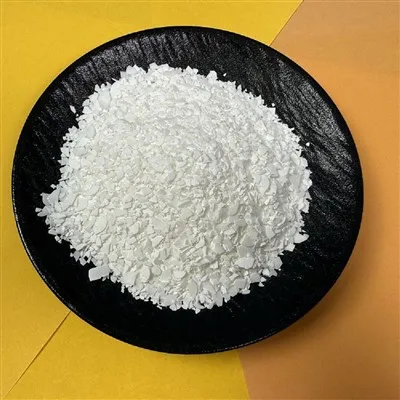
If you’re tired of wasting material on bad parts, losing production time to clunky mixes, or replacing composites that fail too early? Hit us up. We can send you free test samples, help you run lab tests on your current parts vs. parts with our titanate, and walk you through the whole process without the jargon. No complicated forms, no endless phone calls—just a conversation about what you need to make your composites work better.
Titanate Coupling Agents References:
- Harper, B. T. (2002). Titanate Coupling Agents for Fiber-Reinforced Thermoplastics. Journal of Applied Polymer Science, 83(12), 2697-2705.
- Kalia, S., Kaith, B. S., & Kaur, I. (2009). Pretreatments of Natural Fibers and Their Application as Reinforcing Material in Polymer Composites: A Review. Polymer Engineering and Science, 49(7), 1253-1272.
- Wypych, G. (2016). Handbook of Coupling Agents (2nd ed.). ChemTec Publishing.
- Zhang, L., et al. (2021). Interface Adhesion in Carbon Fiber Reinforced Epoxy Composites: Effects of Titanate Coupling Agents. Composites Science and Technology, 207, 108729.
Shandong Chunqian New Material Co., Ltd.
As one of the most professional titanate coupling agents manufacturers and suppliers in China, we also support customized service. Please feel free to buy discount titanate coupling agents made in China here from our factory. Quality products and low price are available.
Address: Room 602, Leshang Commerial Building, intersection 0f Xueyuan Road And jianxin Street, shengcheng Sub-district, shouguang City, Weifang, shandong
E-mail: z15866134776@163.com
WebSite: https://www.cqcouplingagent.com/
