Hey there! I’m a supplier of forklift robots, and I often get asked, "What’s the minimum working space required for a forklift robot?" It’s a great question, and today, I’m gonna break it all down for you. Forklift Robot
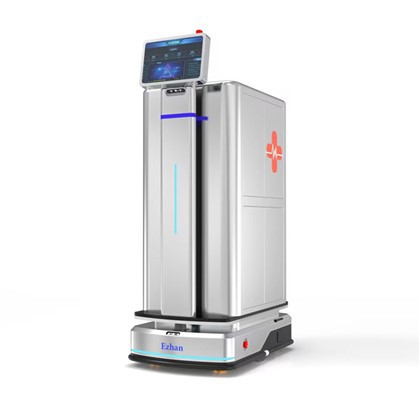
First off, let’s talk about why the working space is such a big deal. Forklift robots are awesome for automating material handling, but if they don’t have enough room to move around, they’re not gonna work at their best. They need space to pick up and drop off loads, turn around, and travel between different points in a warehouse or factory.
The size of the forklift robot itself is a major factor. Different models come in various sizes, and the bigger the robot, the more space it’ll need. For example, some of the smaller forklift robots we supply are designed for tight spaces. They might be able to operate in aisles that are just a few feet wide. These compact models are great for warehouses with narrow storage racks. On the other hand, larger forklift robots, which can handle heavier loads, need more space. They typically have a wider turning radius, so the aisles need to be wider to accommodate them.
Another thing to consider is the type of load the forklift robot will be carrying. If it’s moving small, lightweight items, the robot might be able to maneuver more easily in a smaller space. But if it’s dealing with large, bulky loads, like pallets of heavy machinery parts, it’ll need more room. The load can affect the robot’s stability and its ability to turn safely. So, when calculating the minimum working space, you gotta think about what the robot will be transporting on a regular basis.
The layout of the facility also plays a huge role. In a warehouse with a simple, straight – line layout, the forklift robot might need less space compared to a facility with a more complex, maze – like design. For instance, if there are a lot of obstacles, such as columns, storage bins, or other equipment, the robot will need extra space to navigate around them. And if there are multiple forklift robots operating in the same area, you need to account for their interaction. They should have enough space to pass each other safely without getting in each other’s way.
Let’s get into some specific numbers. For a basic, small – sized forklift robot designed for light – duty tasks, the minimum aisle width could be around 6 to 8 feet. This allows the robot to pick up and drop off loads and make small turns. But for medium – sized forklift robots that can handle moderate loads, the aisle width should be at least 8 to 10 feet. And for large, heavy – duty forklift robots, we’re looking at aisle widths of 10 to 12 feet or more.
When it comes to the overall working area, you also need to consider the loading and unloading zones. These areas should be large enough for the robot to approach the load, lift it, and then move away without any issues. A good rule of thumb is to have a clear area around the load that’s at least as large as the footprint of the load itself, plus some extra space for the robot to maneuver.
Now, let’s talk about how we, as a forklift robot supplier, can help you figure out the right working space for your needs. We’ve got a team of experts who are really good at assessing different warehouse and factory layouts. They’ll come to your place, take a look at the existing setup, understand what kind of loads you’re dealing with, and then recommend the best forklift robot model for you. And based on that model, they’ll calculate the minimum working space requirements.
We also offer some cool simulation tools. You can input your facility’s layout, the types of loads, and the number of forklift robots you’re thinking about using. The simulation will then show how the robots will move around in your space, highlighting any potential bottlenecks or areas where more space might be needed. This way, you can make informed decisions before you actually purchase the forklift robots.
If you’re in the process of planning a new warehouse or factory, we can be involved from the very beginning. Our experts can work with your architects and engineers to design a layout that’s optimized for forklift robot operation. This can save you a lot of headaches and money in the long run.
In conclusion, determining the minimum working space for a forklift robot isn’t a one – size – fits – all situation. It depends on the size of the robot, the type of load, the facility layout, and how many robots will be working together. But don’t worry, we’re here to help you every step of the way. Whether you’re just starting to think about automating your material handling or you’re looking to upgrade your existing forklift robot system, we’ve got the knowledge and the tools to make it a success.
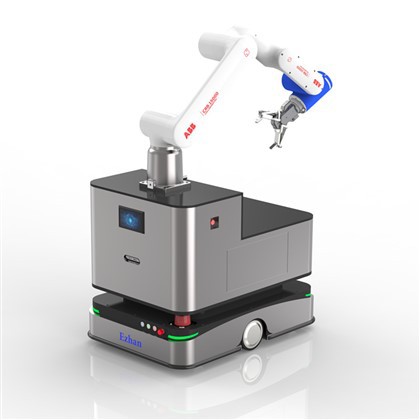
If you’re interested in learning more about our forklift robots and how they can work in your space, don’t hesitate to reach out. We’d love to have a chat with you, answer your questions, and show you how we can make your material handling process more efficient. Contact us to start the procurement discussion and see how we can meet your specific needs.
Software System References
- Material Handling Handbook: A comprehensive guide on all aspects of material handling, including forklift robot operation and space requirements.
- Industry reports on warehouse automation and forklift robotics, which provide real – world case studies and best practices for space utilization.
Shenzhen Ezhan Technology Co., Ltd.
We’re known as one of the most reliable forklift robot manufacturers and suppliers in China. With abundant experience, we warmly welcome you to buy bulk customized forklift robot from our factory. If you have any enquiry about cooperation, please feel free to email us.
Address: Room 1808, 1809, 1810, Building 2, Aipark, Baolong 4th Road, Longgang District, Shenzhen City
E-mail: sales01@ezhankeji.com
WebSite: https://www.ezhanrobot.com/
