As a slant – bed CNC lathe supplier, one question I get asked a lot is, "Can a slant – bed CNC lathe be used for machining hardened materials?" Well, let’s dig into this topic and find out. Slant-bed CNC Lathe
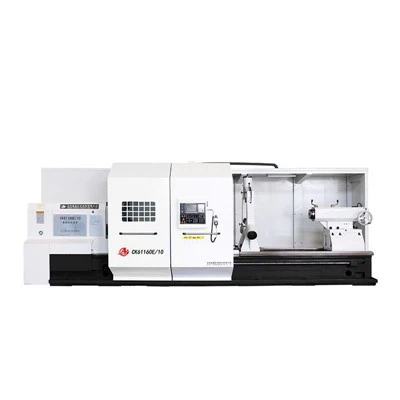
First off, let’s talk a bit about slant – bed CNC lathes. These lathes are pretty awesome. The slant – bed design offers some real advantages. For starters, it provides better chip evacuation. You know, when you’re machining, chips are constantly being produced. If they don’t get out of the way quickly, they can mess up your work, cause tool wear, and even lead to inaccurate cuts. With a slant – bed design, chips just slide right down, thanks to gravity. This helps keep the cutting area clean and the machining process smooth.
Another plus of slant – bed CNC lathes is the increased rigidity. The angle of the bed gives the lathe more stability. When you’re making precise cuts, any little bit of vibration can throw off your measurements. The extra rigidity means less vibration, so you can make more accurate cuts. And let’s not forget about productivity. These lathes usually have a faster turn – around time for changing tools, which can really boost the production rate.
Now, onto the main question: machining hardened materials. Hardened materials are, well, hard! They’re typically made that way to make them more durable, often for use in high – stress applications like automotive parts or aerospace components. Examples of hardened materials include hardened steel, which can have a high carbon content and is heat – treated to increase its hardness, and some alloys.
One of the challenges of machining hardened materials is that they can be tough on tools. The harder the material, the more wear and tear it causes on the cutting tool. The cutting edge can dull quickly, and if you’re not careful, you might even break the tool. But here’s the good news. A slant – bed CNC lathe can absolutely be used for machining hardened materials, as long as you’ve got the right setup.
Let’s start with the cutting tools. You need to choose the right ones for the job. For hardened materials, carbide inserts are often a great choice. Carbide is super hard and can withstand the high pressures and temperatures generated when cutting through tough stuff. There are also ceramic and cubic boron nitride (CBN) tools. Ceramic tools are good for high – speed machining of hardened materials. They can handle high temperatures well, but they’re a bit more brittle, so you need to be careful with them. CBN tools are even harder and are ideal for machining materials with very high hardness levels, like some hardened steels with a Rockwell hardness of over 60 HRC.
The spindle speed is another crucial factor. When machining hardened materials, you can’t just go full – throttle like you might with softer materials. Running the spindle too fast can cause excessive heat generation, which can damage the tool and the workpiece. You need to find the sweet spot. Generally, you’ll want to run at a lower spindle speed compared to machining softer materials. But it also depends on the specific material and the tool you’re using. You can usually find recommended spindle speeds in the tool manufacturer’s guidelines.
Feed rate is also important. A too – high feed rate can put too much stress on the tool and cause it to fail. On the other hand, a too – low feed rate will just make the machining process take forever. You need to balance it out. You’ll typically want to use a slower feed rate when machining hardened materials, but again, this depends on factors like the tool material and the hardness of the workpiece.
In addition to the tool and speed settings, proper coolant is a must. Coolant helps to reduce heat during the cutting process. When you’re machining hardened materials, a lot of heat is generated due to the high resistance of the material. If the heat isn’t controlled, it can cause the tool to wear out faster and can even change the properties of the workpiece. There are different types of coolants available, such as water – based coolants and oil – based coolants. Water – based coolants are good for general use and are more environmentally friendly. Oil – based coolants offer better lubrication, which can be beneficial when machining very hard materials.
Another thing to consider is the programming of the CNC lathe. You need to program it carefully to account for the unique properties of hardened materials. This might involve setting up the appropriate cutting paths, using pecking cycles to break up the chip – formation process, and making sure that the tool doesn’t over – stress the workpiece.
So, from my experience as a slant – bed CNC lathe supplier, I can tell you that with the right tools, appropriate speed and feed settings, proper coolant, and careful programming, a slant – bed CNC lathe can handle machining hardened materials very effectively.

If you’re in the market for machining hardened materials and you’re considering a slant – bed CNC lathe, I’d love to chat with you. Every machining project is unique, and I can help you figure out the best setup for your specific needs. Whether you’re a small – scale shop looking to expand your capabilities or a large – scale manufacturer aiming to improve efficiency, we can work together to get the job done right. Don’t hesitate to reach out and start a conversation about your requirements.
Heavy Duty Lathe References:
- "CNC Machining Handbook" by an industry – recognized author
- Technical data sheets from cutting tool manufacturers
- Research papers on high – performance machining of hardened materials
Anyang Xinsheng Machine Tool Co., Ltd.
We’re well-known as one of the leading slant-bed cnc lathe manufacturers and suppliers in China, featured by quality products and good price. Please rest assured to buy advanced slant-bed cnc lathe made in China here from our factory. Contact us for more details.
Address: No.68 Renmin road, Anyang, Henan, China
E-mail: sales@anyangst.com
WebSite: https://www.xslathe.com/
